Policy Guide
Insurance terms, explained like a friend would.
Every rejected claim traces back to a term in the policy document that somebody didn't understand. This page is the plain-English version of the ones that matter most.
Every rejected claim traces back to a term in the policy document that somebody didn't understand. This page is the plain-English version of the ones that matter most.
The one that matters most
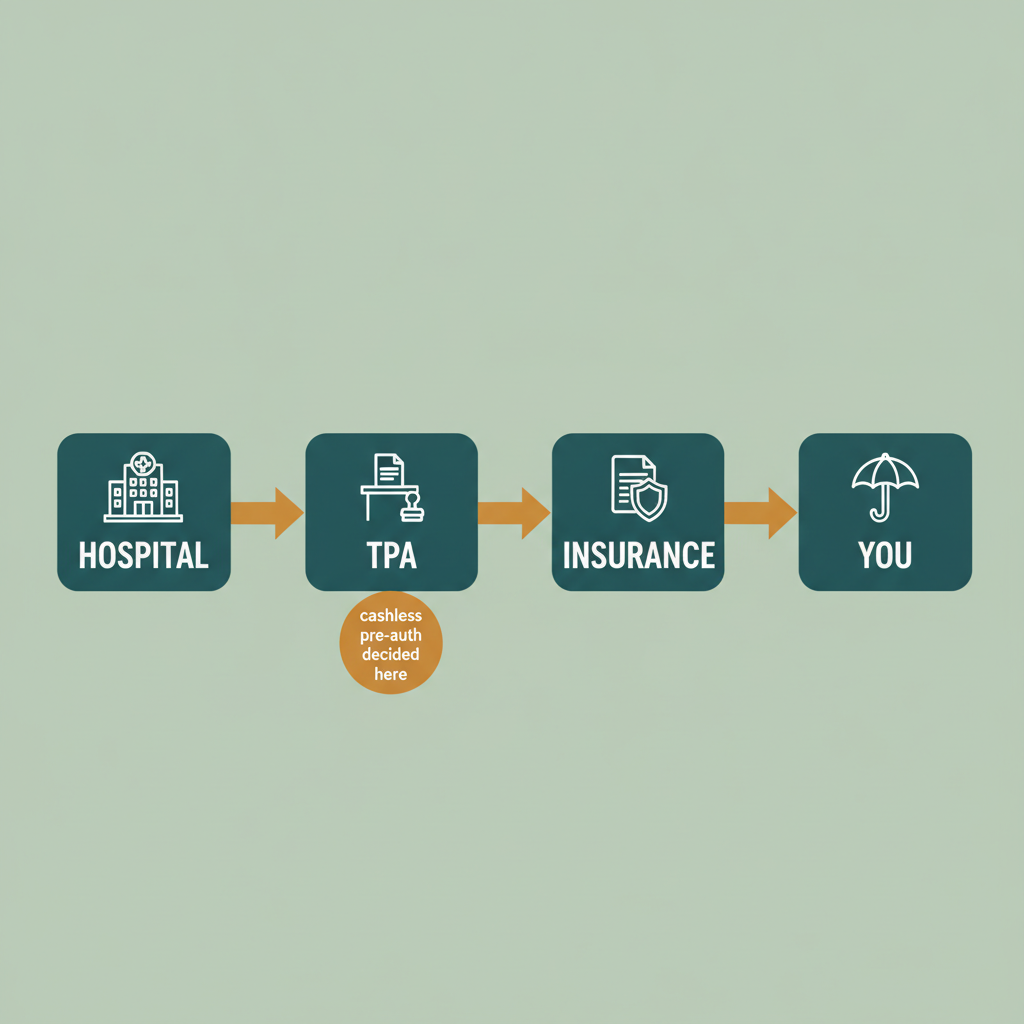
A Third Party Administrator (TPA) is the company your insurer hires to process health claims. When you ask for cashless treatment, the hospital sends your file to the TPA — not the insurer. The TPA checks it against your policy terms and issues (or denies) the pre-authorisation. Their questions decide whether your family pays ₹0 or the full bill at discharge. Major TPAs in India include Medi Assist, Paramount, Vidal and HealthIndia {{VERIFY list}}. Policyholders meet a TPA once, on the worst day of the year. We talk to them every week — and at claim time, your advisor handles them for you.
Glossary
Time you must hold the policy before certain illnesses are covered. Example: knee surgery may be excluded for the first 2 years.
Cap on the daily room charge. Breach it and many policies cut the whole bill proportionally — not just the room cost.
The fixed percentage of every claim you pay yourself. Common in senior-citizen plans — 10–20% is typical {{VERIFY range}}.
The fixed amount you pay before insurance starts paying. Common in top-up plans.
Any illness you had before buying the policy. Must be disclosed; usually covered only after a waiting period.
Caps inside your sum insured for specific treatments (e.g. cataract). The fine print that shrinks big-looking covers.
Refills your sum insured if you exhaust it in a policy year. Read whether it triggers on the same illness or only different ones.
Cashless: insurer/TPA settles with the hospital directly (network hospitals only). Reimbursement: you pay first, claim later — documentation is everything.
Independent by licence
We are a broker — we work for you, not for any one insurer, and we're not capped to a handful of insurance companies. Before we recommend any insurer, it must clear our shortlist rules:
We explain all of this — with your actual shortlist — before you buy. That's the point.
Questions
Neither — it's simply who processes your claim. What matters is having someone who knows how TPAs evaluate files on your side.
In-house teams settle claims directly without a TPA. Either model works; claim culture of the insurer matters more than the mechanism.
The "Definitions" and "Exclusions" sections. Or send us your policy PDF on WhatsApp — we'll mark the five clauses that matter for you, free.