Questions
Term insurance — your questions, answered
How much term cover do I need?
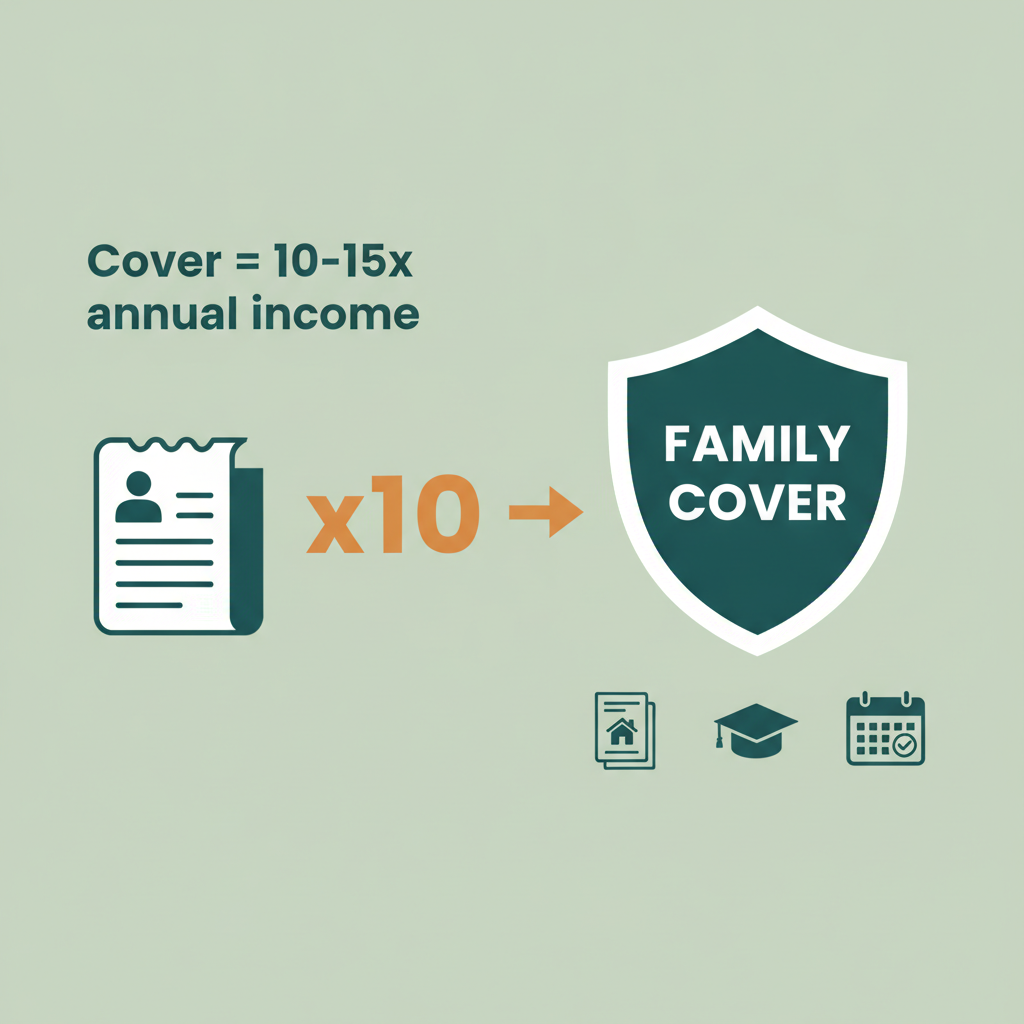
A common starting rule is 10–15× annual income {{VERIFY with client}}, adjusted for loans and children's education. We'll compute your number on a call — it takes 15 minutes.
What if my nominee doesn't know how to file a claim?
With us, they won't have to figure it out. Your nominee gets our claims line at onboarding, and we file and chase the claim for them.
Should I disclose that I smoke?
Yes, always. The premium difference is small; a claim rejected for non-disclosure is total. Honesty at purchase is the whole game.
Is ₹1 crore enough?
For some families, yes; for others it's half the need. Cover depends on income, loans, and dependents — not on the roundness of the number.
What happens if I miss a premium?
Term plans lapse after the grace period, and a lapsed policy pays nothing. We track our clients' renewals and remind you before that can happen.
Term or endowment — which is better?
For pure protection at honest cost: term, almost always. If an agent is pushing a savings-cum-insurance plan, ask them what it returns versus term + a mutual fund SIP. We'll show you the same math.